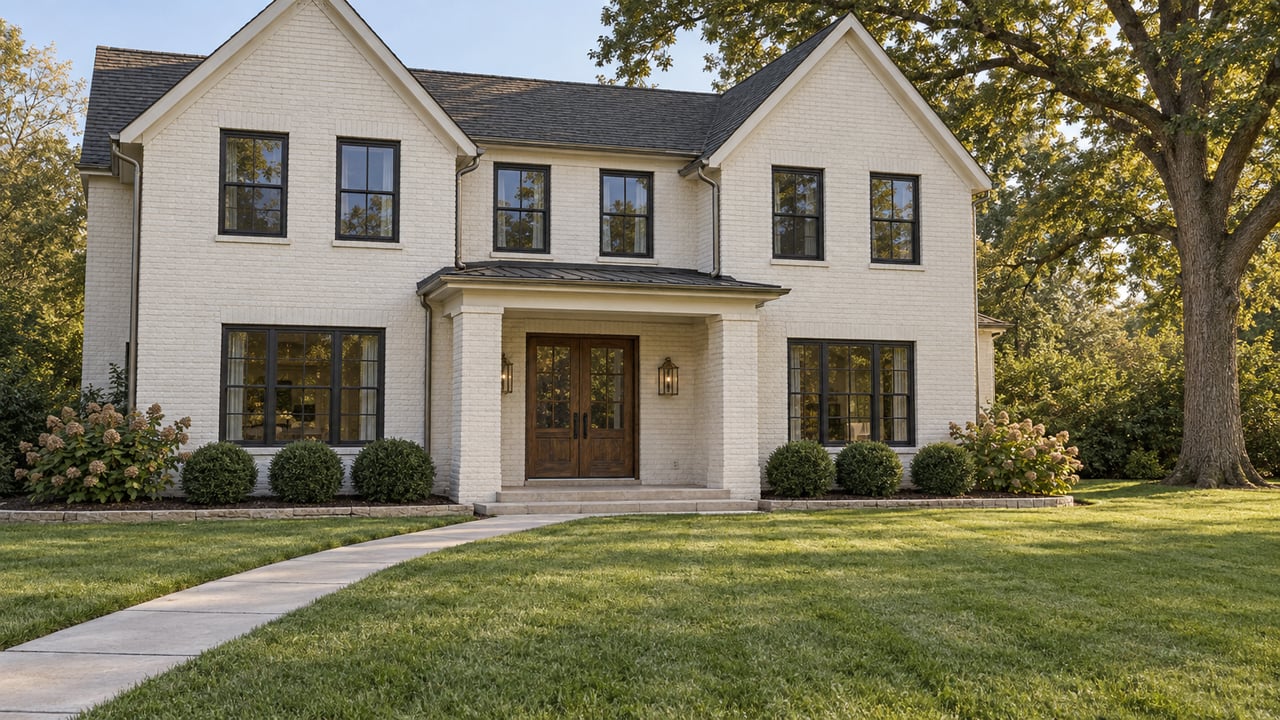
Green Hills East's Overlay Vote Still Isn't Settled. Here's What That Means for the House You're Considering.
October 8, 2026
October 8, 2026
If you buy a house this fall on Green Hills Drive, Bonner Avenue, Eden Avenue, the Observatory streets or Burton Avenue, you can close on it with no surprises about the house itself. What's still open is whether you can add a second story later or replace the house entirely. Metro Planning's status page, last updated September 24, 2026, says this neighborhood is still "exploring the possibility of a neighborhood conservation zoning overlay." The earlier bill was filed and then pulled.
That status matters most to a buyer here. When you buy an older brick cottage or ranch in a part of Nashville this close to everything, some of what you pay for is the chance to change it later. In Green Hills East, the rules for that kind of change are still being argued over, in public and in writing.
The process has had several restarts:
Preptit described the replacement process in June, before the ballots went out:
"It will also include a paper ballot that will be pre postmarked... providing the steering committee the ability to audit that just to make sure that all the information, all the ballot tabulation is correct."
So far, the only published tally comes from Green Hills East, the residents' group opposing the overlay. After removing the ballots it disputes, the group counts 55 yes, 29 no and 6 undecided out of 90 responses. That's 61.1 percent of the ballots returned. The group also calculates the yes votes as 44.4 percent of the 124 homes on Metro's owner list. The group argues that the measure that counts is a share of the whole neighborhood, not a share of the ballots returned. It also says the mailed ballot asked only about the conservation overlay, even though a second option was supposed to be on it. Residents supporting the overlay say recent construction in the area is out of scale with the original houses.
Metro's September 24 update doesn't report a ballot result or a new bill. It still says Preptit plans to survey residents. Whichever count holds up, Metro's contextual-overlays page says a ballot doesn't create an overlay by itself; Council has to pass legislation.
Before you get to the overlay question, there's a citywide rule that already affects these lots. BL2025-1006 took effect December 26, 2025. In most R and RS zoning districts, it limits new single-family and two-family homes to two and a half stories, a 24-foot eave and 35 feet overall. The old limit was three stories with no maximum height in feet. The R40, RS40, R80 and RS80 districts are excluded.
Check the zoning on the specific parcel you're considering. If it's in one of the covered districts, a rebuild there already has a lower ceiling than it did a year ago. Any overlay would add rules on top of that.
Preptit said the community materials would compare two tools: a neighborhood conservation overlay and a contextual overlay. For an owner, they work very differently.
| Neighborhood Conservation Overlay | Contextual Overlay | |
|---|---|---|
| Who reviews | Review by Metro Historic Zoning Commission and its staff under Metro's conservation-overlay guidelines | Codes and the Zoning Administrator, as part of the building permit |
| What triggers review | New construction, additions that change footprint or height, demolition, relocation | New construction and additions |
| Demolition | Reviewed. The guidelines call demolishing a contributing building inappropriate | No demolition review |
| How rules are set | Design guidelines written for the district | Measurements based on neighboring homes |
| Paint and interiors | Not reviewed | Not reviewed |
Under a contextual overlay, the math comes from your neighbors. The Lealand Lane and Glendale Lane contextual overlay sets the front setback generally at the average of the two developed lots on each side. Height is limited to the lower of 35 feet or 125 percent of the average height of those reference homes. If that calculation comes out under 27 feet, you can still build a story and a half up to 27 feet. Building coverage can reach 150 percent of the neighbors' average. A detached garage has to sit behind the house, and an attached garage door has to face a side or rear property line. That overlay, north of Battery Lane, took effect May 19, 2017.
For a buyer, the practical difference is predictability. A contextual overlay gives you numbers an architect can work with before you make an offer. Metro's preservation-permit guidance explains that a conservation overlay sends infill, large additions and demolition of historic primary buildings to a commission that applies written guidelines to each project.
Metro has published draft guidelines written for Green Hills East, and they're specific. The draft sets a period of significance of 1927 to 1960. It says infill "should be one or one and one half stories" and notes that the neighborhood has only four historic two-story buildings. New construction would need at least 80 percent brick or stone as its primary cladding.
Compare that with the 2.5-story, 35-foot limit that took effect in December. On a lot that's otherwise identical, the draft overlay would roughly cut the height of a new house in half. These are draft rules and aren't in effect today. Still, they show you what a conservation overlay here would most likely look like if it passed.
The draft's historic context explains why the neighborhood became a preservation target. It describes a 2006 downzoning effort, overlay discussions in 2024, and a market that encouraged tearing down small and medium-sized houses for "mcmansions." Metro Planning calls Green Hills East the first subdivision in the Green Hills area and the source of the larger area's name. The draft connects the neighborhood to the national Better Homes in America movement of the late 1920s.
Some of that history has already been corrected. Pemberton's reporting, published in the Nashville Scene in June, found that the 1927 Tennessean Model Home actually stood at 1612 N. Observatory Drive, not at 1637 S. Observatory as the draft said. Metro Planning accepted the correction. It also committed to reviewing deeds for racial covenants if the overlay is refiled.
This matters for a buyer because a conservation overlay sorts houses into contributing and non-contributing buildings, and the demolition guidelines apply to contributing ones. If the overlay comes back, check how your house is classified in the version actually filed, not in the 2025 draft.
Here's what I'd want to confirm for any client looking at a house inside the proposed boundary:
In Green Hills East right now, the house itself is what you can count on owning. A price that makes sense for that house, with its current rooms, roofline and brick, holds up whatever the vote turns out to be.
Is there an overlay in effect on these streets today? No. BL2025-1175 was withdrawn on May 7, 2026, and Metro's September 24 update describes the effort as still being explored.
Would a conservation overlay control my paint color or kitchen? No. Nashville's conservation overlay guidelines cover the exterior and don't review ordinary paint or interior work.
Does the August ballot decide it? Not by itself. Any overlay still has to pass Metro Council as legislation, and the ballot count is still disputed.
If you're looking at a home between Shackleford and Glen Echo and want to check the zoning, the filing status and the house's history before you make an offer, I'm glad to go through it with you. Contact Suzy Mills Team to schedule a free home consultation, and we'll look at the house as it stands and what the rules may allow later.
This article is general information, not legal, tax or financial advice. Consult a qualified professional about your situation.
Stay up to date on the latest real estate trends.
Get assistance in determining current property value, crafting a competitive offer, writing and negotiating a contract, and much more. Contact Suzy today.
Compass RE 106 E Main St. Franklin, TN 37064